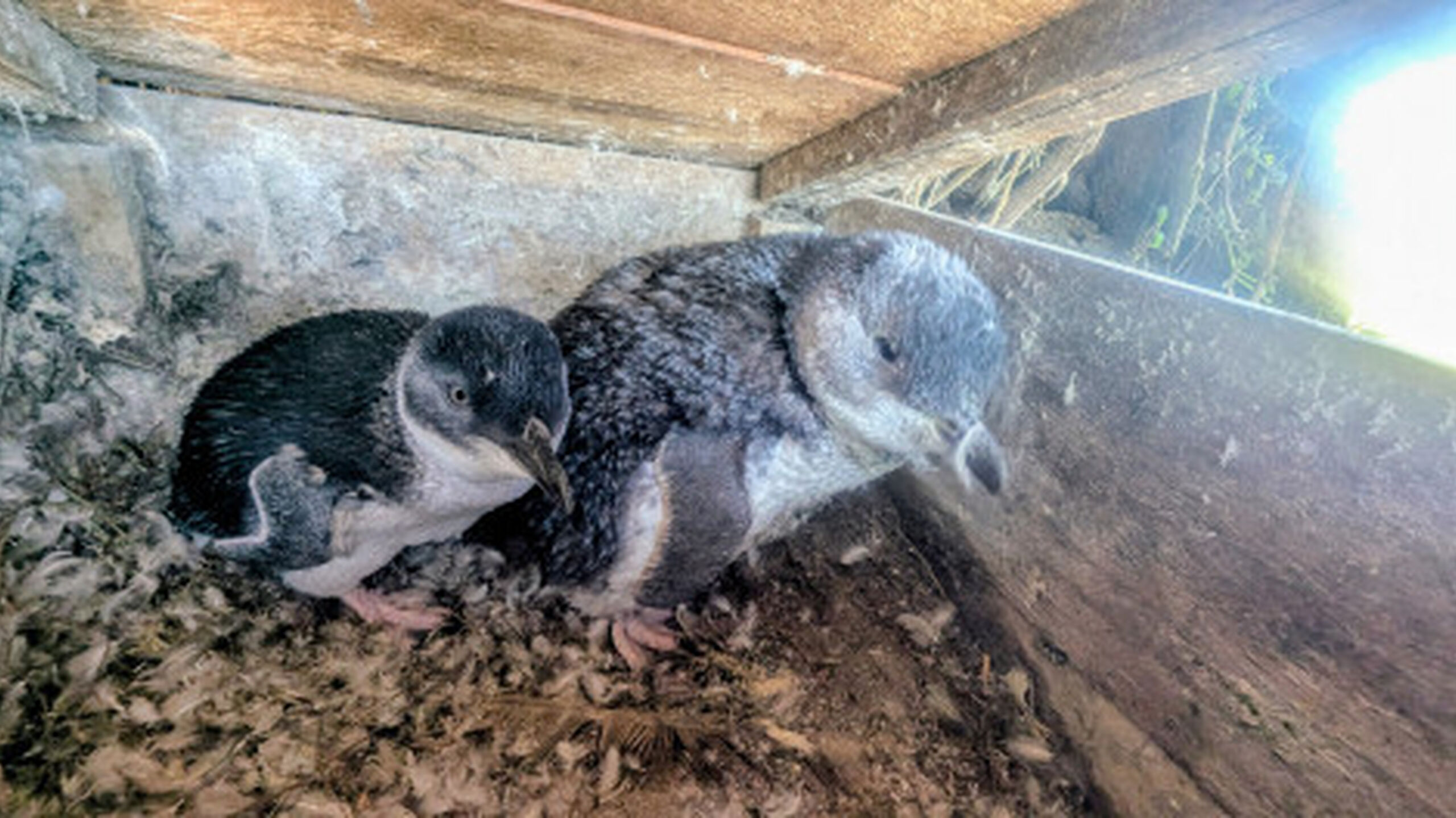
What are little penguins up to in Autumn?
Across the colony, the conservation research team members are now seeing penguins in various stages of the moult process, some looking scruffy and puffed-up with swollen flippers as new feathers push through, while others are already showing off a complete set of beautiful new blue feathers ready for the year ahead.
Although not all penguins breed every year, every adult penguin must undergo what is known as a ‘catastrophic moult’. The moult is a complete replacement of all their roughly 10,000 feathers over a period of a few weeks. For a species that spends 80% of their lives in the water it is a vital process to replace worn feathers and to maintain waterproofing.
Because the penguins lose waterproofing during this time, the birds must remain on land and cannot feed. They spend several weeks beforehand at sea, fattening up and in some cases nearly doubling their weight before coming ashore. This shift in season is reflected in the nightly penguin parade counts, which have dropped from an average of 885 penguins per night in January to 389 per night in February.
Photograph: A breeding pair in one of our study site nest boxes, the male in early stage of moult (right) and female almost complete (left).