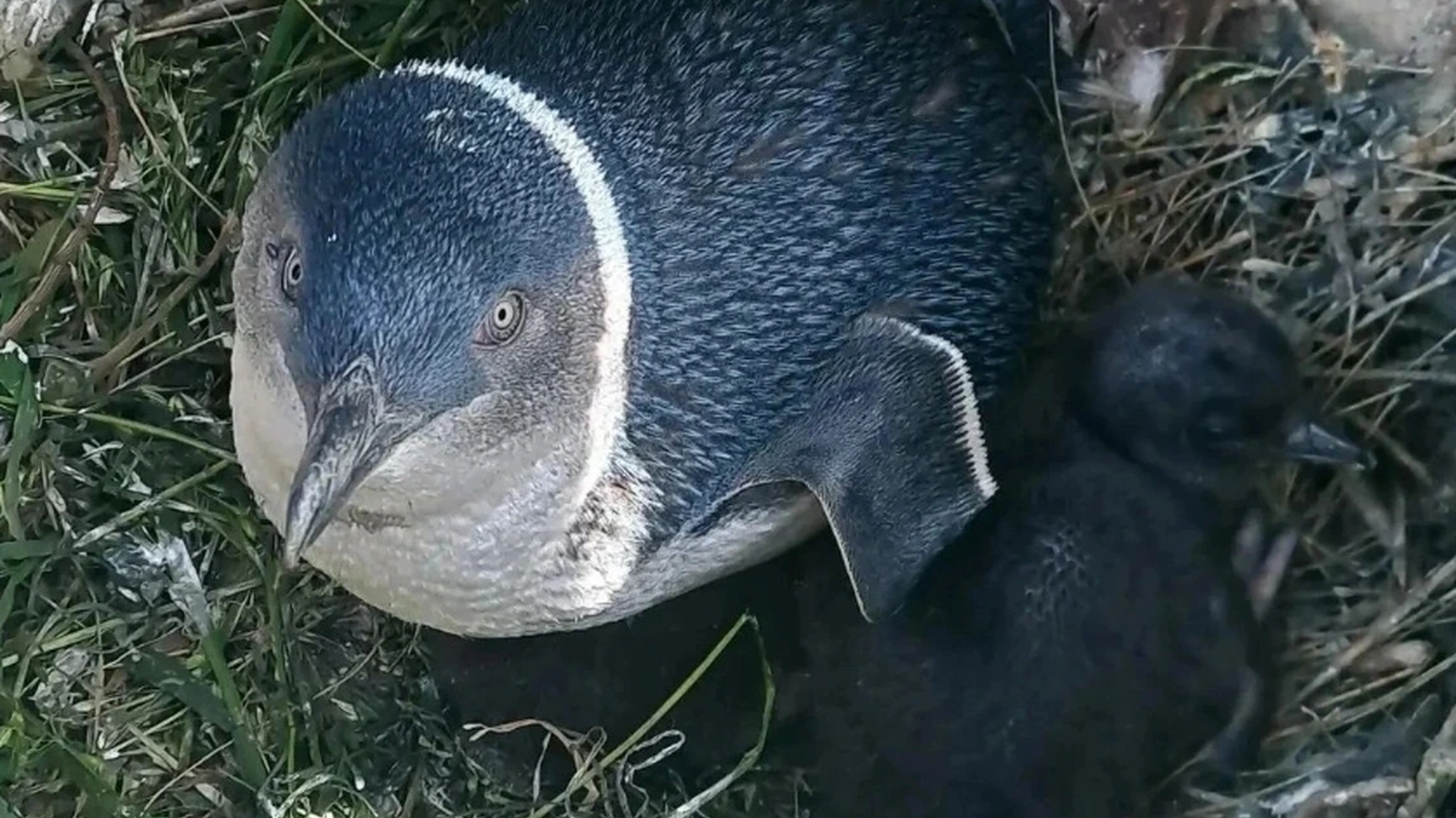
Research reveals best start for little penguins
Researchers followed more than 2,200 penguins from the 37,000 strong Summerland Peninsula colony, from hatching to the end of their lives, using unique long-term monitoring to study their ecology and how early-life growth influences individual life-history outcomes.
The study found that early developmental trajectories are strong predictors of individual reproductive success and survival in the wild. Phillip Island’s fledgling penguin chicks are similar to young children, with positive early-life conditions giving them the best start in life.
The study, in collaboration with French scientists, was published in the Journal of Animal Ecology and found that early developmental trajectories are strong predictors of individual reproductive success and survival in the wild.
Phillip Island Nature Parks Penguin Scientist, Adjunct Professor Andre Chiaradia said the analogy of penguins and children both needing the best start to life to thrive in later years means that for penguins, the faster and heavier chicks grow, the higher chance they will be successful in their adult life.
“Using a long-term data set with growth measurements and demographic modelling, we were able to examine the impact of early growth on subsequent life-history outcomes,” Prof. Chiaradia said.
“It’s the first time we’ve been able to map this many penguins over their lifetime to get a full picture on what impacts their survival in the wild.”
“Our study shows that early developmental trajectories are predictors of individual reproductive success and survival in the wild,” said Justine Wintz, a PhD student at the University of Strasbourg who led the study.
“We found fast growers survived better, bred earlier, and produced more chicks without shortening their lifespan, showing a ‘silver spoon’ effect where strong early growth gives lifelong advantages in survival and reproduction” said co-author Claire Saraux from the Institut Pluridisciplinaire Hubert Curien.
Using a 26-year dataset on the ecology of little penguins, researchers compiled over 2200 chick growth curves and defined 11 growth parameters classified by magnitude, form and rate. It found three growth strategies: fast, slow, and light.
The Report showed individuals exhibited a range of growth trajectories, clustering into three broad types.
Fast, regular, and robust growth – likely reflecting favourable environmental conditions and effective parental investment – was associated with the highest lifetime fitness outcomes.
While lighter weight chicks may not have had enough reserves to face their first trip at sea, explaining their extremely low juvenile survival. The report said slow chicks were more of a ‘puzzle’. Despite fledging heavy, slow chicks produced fewer chicks over their lifetime as adults, due to reproducing later than other chicks, slightly lower longevity and fledging success.
Authors believe this might have to do with growing irregularly, the consequences of which should be further investigated. Prof. Chiaradia said the results highlighted both the critical role of early-life conditions for little penguins, and the need for researchers to continue studying the growth variation of the species.
“This unprecedented dataset, tracking penguins from hatching to the end of their lives, provides a unique and robust foundation for understanding how early-life conditions shape survival and reproductive success, offering valuable insights for future studies on growth and adaptation in the wild,” he said.
You can help contribute to vital research to protect little penguins by visiting the Penguin Parade or donating to the Penguin Foundation.
Read the full report here: Early-growth trajectories affect juvenile survival, age at first reproduction and lifetime fitness in a long-lived seabird, the little penguin