Future-Proofing Little Penguins Project - wildlife and habitat management
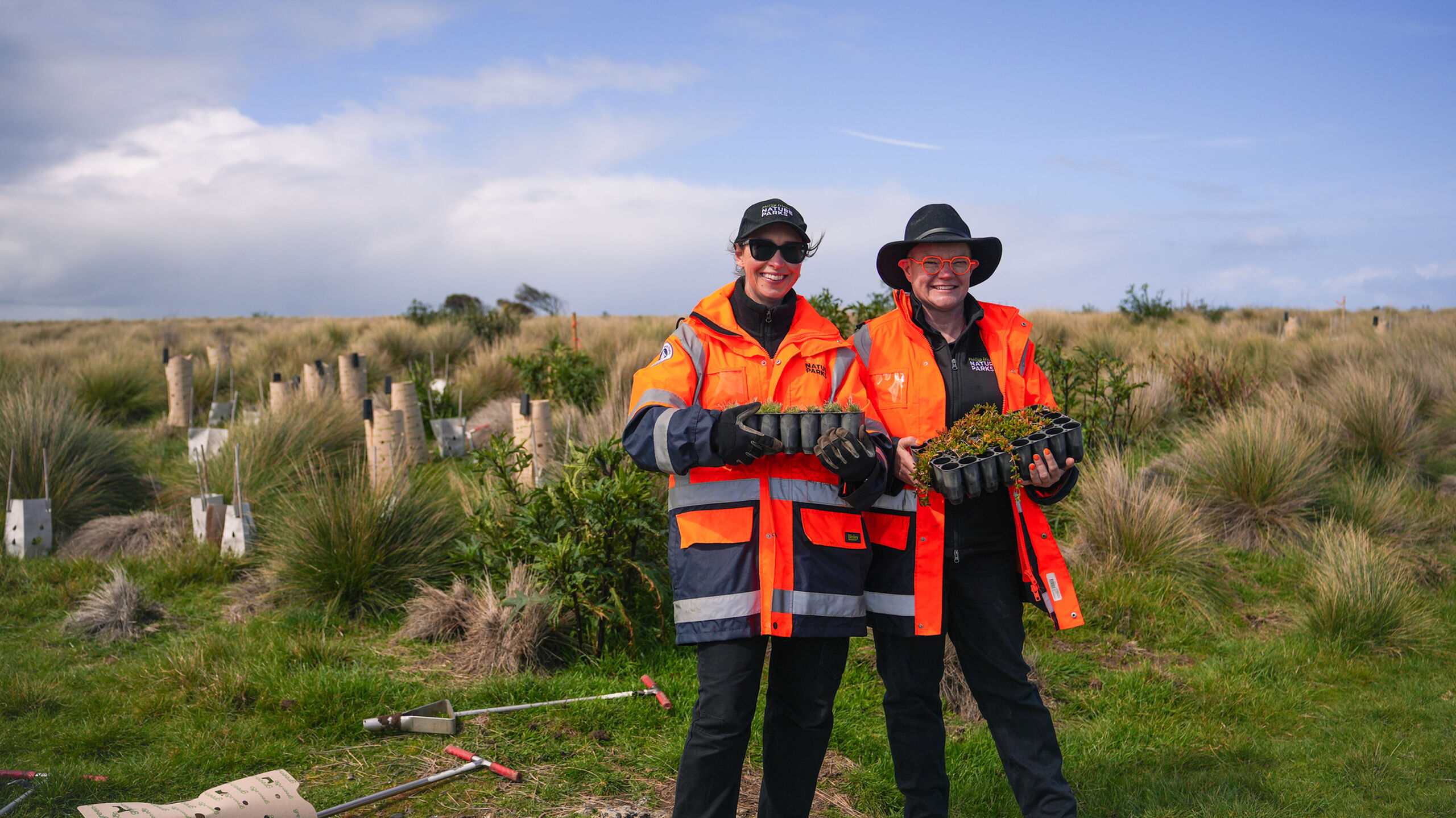
In total, over the three years, 34,000 plants have been planted including 27,500 plants on the firebreaks established during the first year of the project, and 6,500 plants in target areas of little penguin habitat. This was achieved through the combined effort of Nature Parks staff and volunteers, Bunurong Land Council Aboriginal Corporation Natural Resource Management staff, Penguin Foundation staff and volunteer groups, and planting contractors.
The goals of the project:
- Establish a series of ‘green’ firebreaks that have significant cover of fire retardant Indigenous herbaceous plant species, and
- Create cooler little penguin habitat within degraded and exposed areas of the little penguin colony by increasing tree cover and improving cover and diversity of understory/groundcover.
The soil on the Summerland Peninsula is volcanic clay with sandy influence in some parts close to the coast. These clay soils typically dry out and crack in summer but are prone to waterlogging in winter and spring, and subject to periodic localised flooding in low lying areas. All species planted are variously adapted to growing in these soils, but none cope well with extremes of wetting and drying experienced during different seasons. Exposure to strong salt-laden coastal winds adds further influence, depressing growth, and particularly to trees growing close to the coast and in isolation from other vegetation or forms of shelter.
Monitoring project actions including assessing survival and growth of plantings is an important focus for the project. The data collected helps to identify successes and failures and provides information to help inform, refine and improve outcomes of future conservation actions. Recently, environmental science students from Deakin University helped complete a two-year assessment of survival and growth of revegetation plantings on the firebreaks that included assessment of the plants planted during the first year of the project (2023).
The key metric and measure of success set for the project for revegetation was a survival rate of 60% two years after planting. The actual survival rate averaged 22% across the three firebreaks and varied from 12%–35% for each of the individual firebreaks. Survival varied further within each of the firebreaks with soil, drainage and rainfall, coastal winds and herbivory combined to have strong and variable influence on survival and growth.
Although the original goals and expectations for this project may not have been fully achieved, it has provided a much deeper understanding of the current ecological conditions and what is achievable moving forward. While this project is concluding, the knowledge gained is already informing future conservation planning for the Summerland Peninsula.
Thank you to Penguin Foundation Corporate Partners from Penguin Random House Books, NAB, Royal Canin and Toyota for your hands on volunteering at our planting days.